Who doesn’t love hearing the calling sound of an owl in the dead of night?
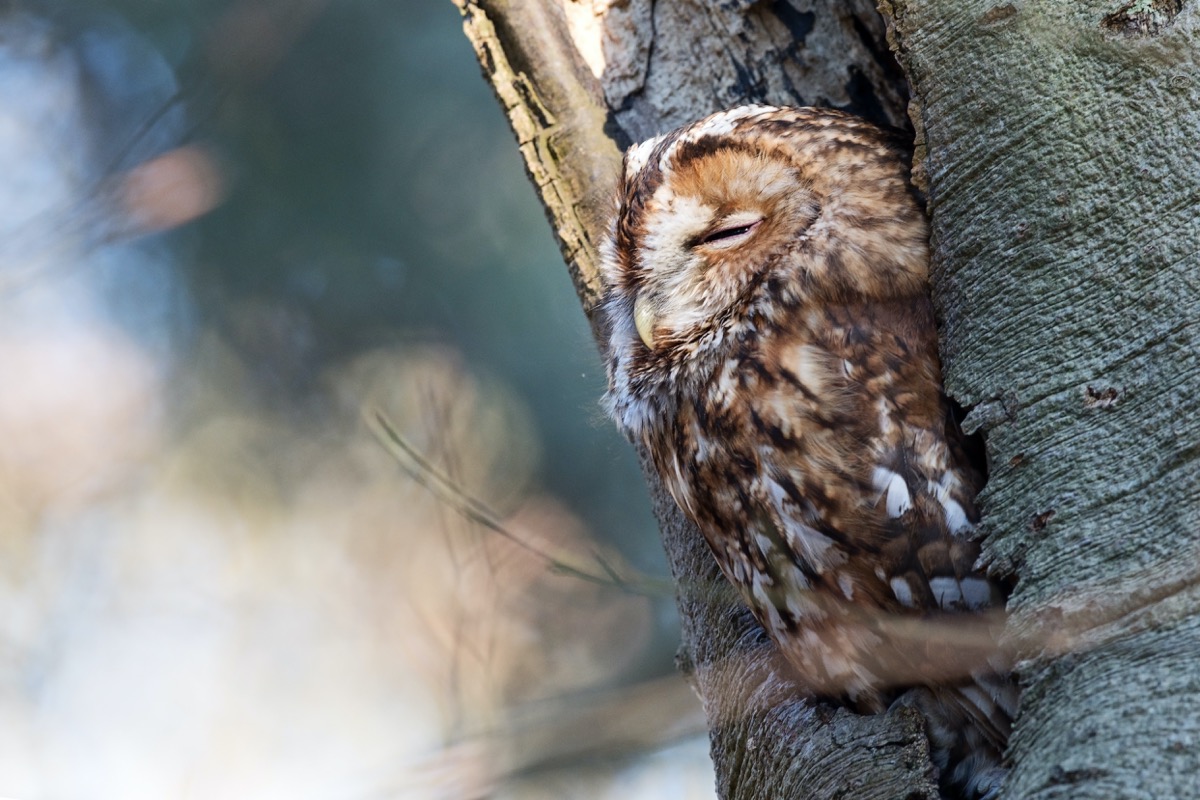
If you hear (or are lucky enough to see!) an owl when you’re at The Glade or meandering through the North Woods after dark, chances are it’s a tawny owl. Native to British woodlands, tawny owls’ preferred nesting spots are hollow spots of very mature trees – although they have also been known to claim old crows’ nests, too.
Active throughout the entire year, it’s tawny owls that make the easily recognisable ‘too-wit, too-woo’ sound. But, it’s not just one owl that you’re listening to when you hear that call – it’s a pair! The female calls out ‘too-wit’ and the male responds ‘too-woo’.
Despite being the most common owl throughout Britain (bar Ireland and the isles – they don’t like to fly over the sea), they are still in decline. But, there is lots that we can do to help them.
The following advice is from The Barn Owl Trust on how we can protect tawny owls:
- Manage existing woodland carefully with a focus on preserving tree age and species diversity
- Nurture and maintain mature trees
- Leave standing deadwood when it is safe to do so
- Allow standard trees to grow within hedgerows
- Create new deciduous, broad-leafed plantations adjacent to existing woodlands
- Erect tawny owl boxes in areas where there is a shortage of very mature trees
If you’re local to Devon, consider visiting The Devon Bird of Prey Centre to learn more about these majestic creatures and even have the chance to fly one. Or, slightly further afield in Cornwall, The Screech Owl Sanctuary & Animal Park makes for an incredible day out.